
If I had $500 to invest in Magic: The Gathering today, I wouldn't simply look for the three cards I think could increase the most.
I'd build a portfolio.
That means balancing:
Potential upside
Risk
Supply
Demand
Playability
Collectibility
Catalysts
Entry price
Liquidity
Most importantly, I don't want every dollar making the same bet.
For this portfolio, I'm focusing on premium versions of cards from Magic: The Gathering | The Hobbit, which released on August 14, 2026. Wizards has positioned the set with several premium treatments, including Showcase, Borderless, Dragon Hoard, Book Cover and Surge Foil versions.
The set is still extremely new.
That matters.
There isn't enough historical price or demand data yet to confidently say where these cards will be in one, three, or five years.
So this isn't a claim that these cards will appreciate.
It is a thesis about where I believe the best risk/reward opportunities may be.
The $500 Pack Portfolio
Starting Capital: $500
Cards: 3
Cash Reserve: $25
Time Horizon: 1–3 Years
How I'd Allocate the $500
CORE $250 / Target Entry: $250 or less
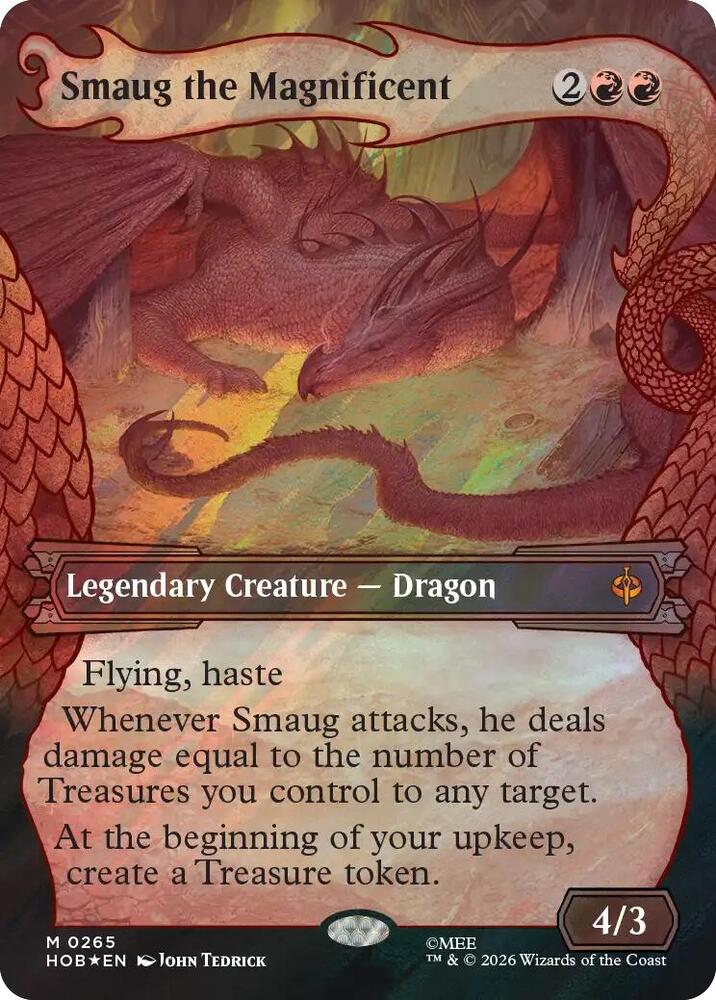
GROWTH $150 / Target Entry: $130 or less
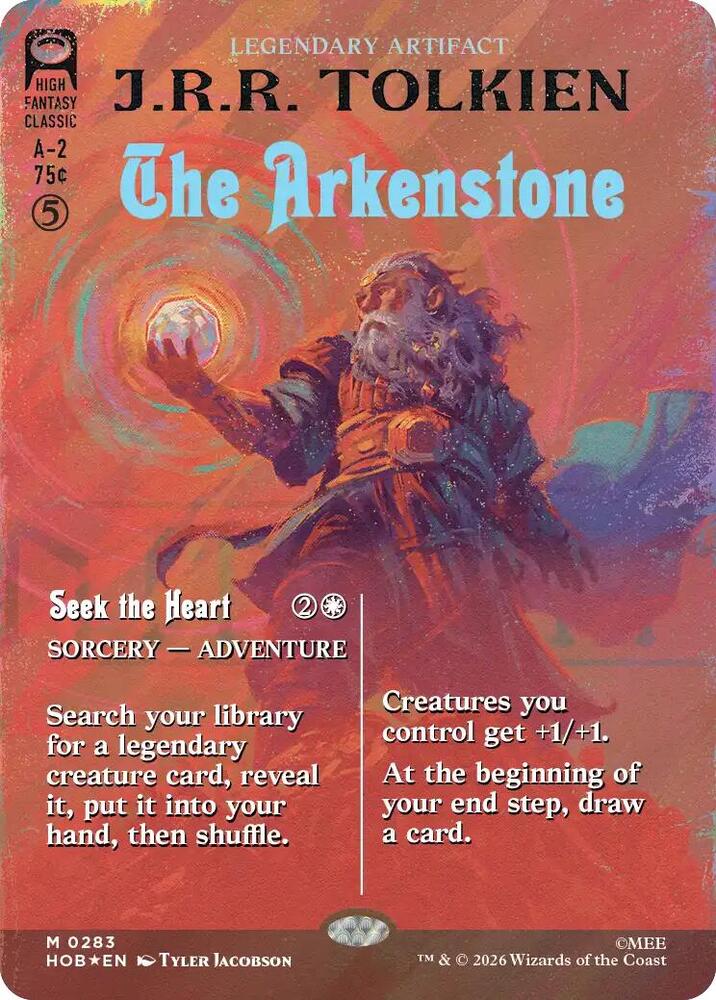
SPECULATIVE $75 / Target Entry: $75 or less
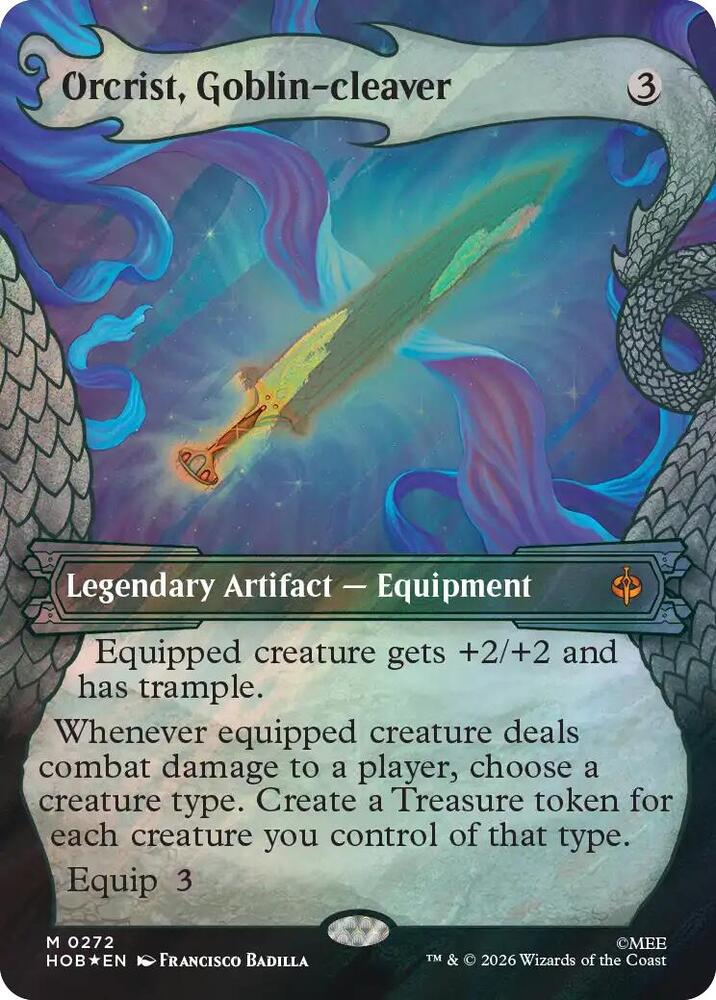
CASH RESERVE $25
Reserved for Opportunity
$250 + $150 + $75 + $25 = $500
I also have two cards on my watchlist:
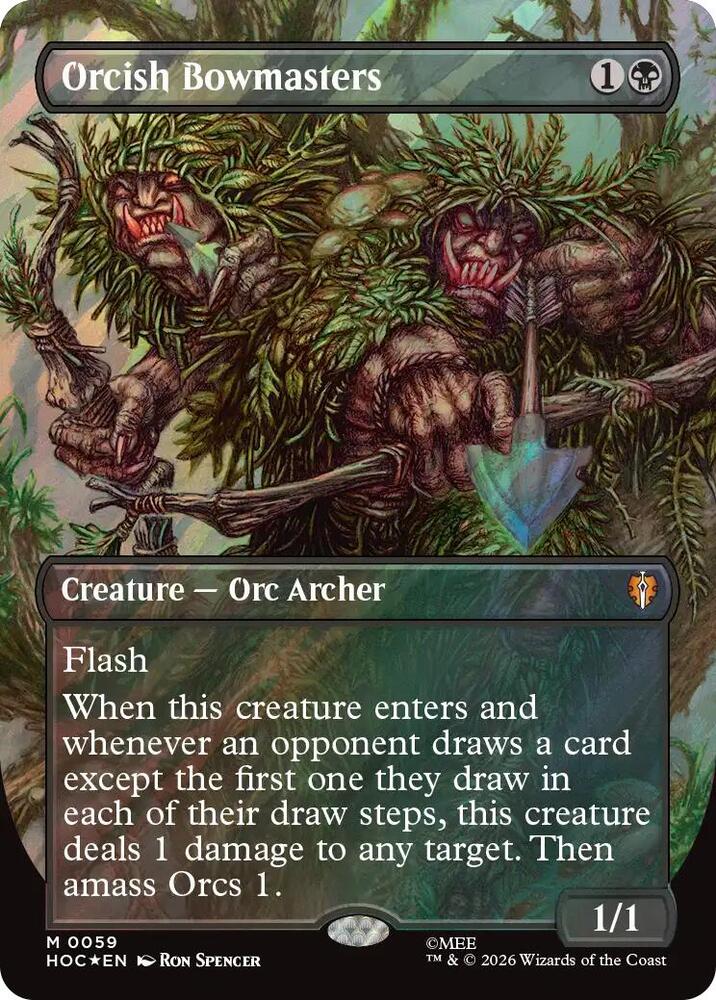
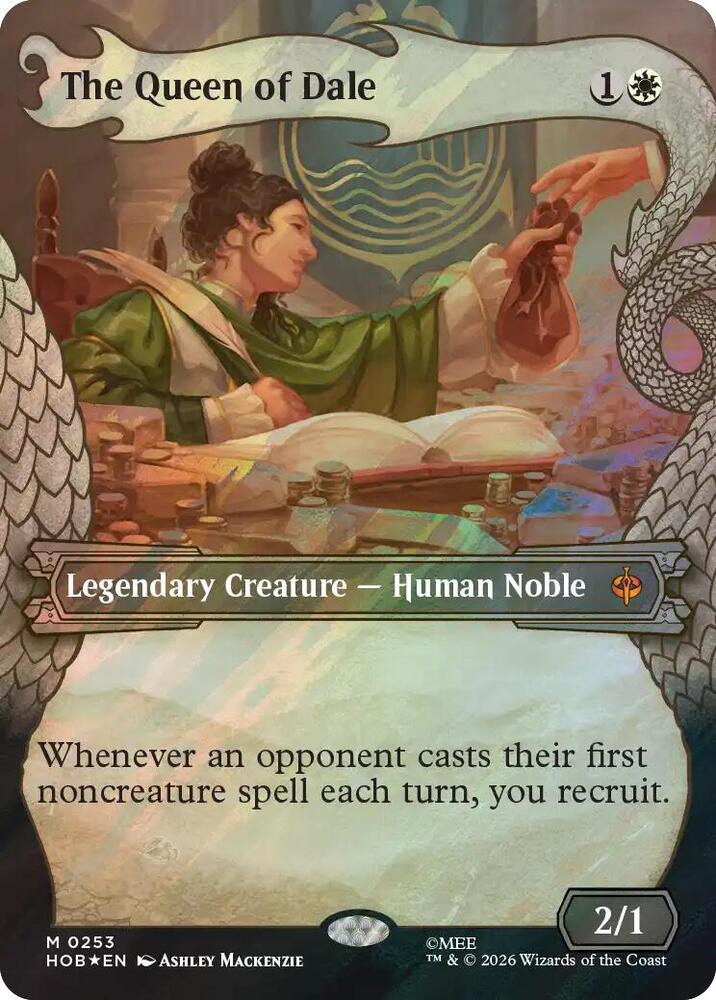
I'm not forcing every card I like into the portfolio.
Sometimes the best position is wait.
Why The Hobbit?
There are two reasons I'm interested in this set.
The first is Magic.
The second is The Hobbit.
Magic has an enormous player and collector ecosystem, while The Hobbit brings decades of existing cultural recognition and nostalgia to the cards.
That combination creates an interesting possibility:
A card can have demand because it is a Magic card—and additional demand because people want to own a piece of Tolkien's world.
That's particularly interesting when we're talking about premium versions.
I'm not interested in every card simply because it has The Hobbit name on it.
I'm interested in cards where gameplay, collectibility, character recognition, artwork and scarcity can overlap.
One Important Disclaimer About the Data
The Hobbit is brand new.
That means we don't have years of price history to analyze.
We don't yet know which cards will become staples.
We don't know which premium treatments collectors will ultimately prefer.
And we don't know how much supply will eventually enter the market.
So I'm not going to pretend we have data that we don't have.
Instead, I'm going to separate three things:
What we know
The card's mechanics, treatment, rarity, current market and early adoption.
What I believe
My investment thesis.
What I'm watching
The evidence that could eventually confirm—or invalidate—that thesis.
That's important because a thesis isn't a fact.
It's a bet on what we believe the future could look like.

Position #1 — Core
ALLOCATION: $250
TARGET ENTRY: $250 or below
TIME HORIZON: 1–3 years
POSITION: WATCH
RISK: Medium/High
CONVICTION: 8/10
Smaug is one of the cards I want to make into a centerpiece for this hobbit portfolio.
And there are two different reasons.
The Magic Thesis
Smaug isn't simply a collectible character.
He's a playable Magic card.
The card is a 4/3 Dragon with flying and haste. Whenever Smaug attacks, he deals damage equal to the number of Treasures you control to any target, and he creates a Treasure at the beginning of your upkeep.
That gives the card an actual gameplay identity rather than relying entirely on its artwork.
There is already early Commander activity around Smaug and cards associated with his Treasure synergy. EDHREC's current data shows Smaug appearing in Commander decklists and Orcrist, Goblin-cleaver appearing frequently alongside it in early Smaug builds.
But the gameplay isn't the only reason I'm interested.
The Collector Thesis
Owning this card also means owning a piece of The Hobbit.
Smaug is one of the most recognizable characters in the franchise.
And the premium treatment matters.
Wizards has specifically created multiple premium versions of Smaug for the set, including Showcase and Surge Foil treatments. The set's collecting guide also highlights special Smaug treatments as major collector pieces.
There's another detail I really like.
The Dragon Hoard treatment actually incorporates a missing scale on Smaug, directly reflecting the story.
It's a small detail.
But those are exactly the kinds of details that can matter to collectors.
A player may care about how good the card is.
A collector may care about the character, the artwork, the treatment, and the story behind the card.
Smaug has the potential to appeal to both.
My Smaug Thesis
I think the price could bounce around the $250 range during the early market period before potentially moving higher over the longer term.
I'm not expecting a quick spike.
I'm interested in owning a premium version of an iconic character that combines:
Magic playability + Hobbit history + premium treatment + collector appeal.
That's a combination I want to hold for several years.
What would confirm my thesis?
I'd want to see:
Continued Commander adoption
Strong demand for premium versions
Premium copies being absorbed rather than continually undercut
Stable or increasing prices after the initial release period
Continued interest in Smaug as a character
What could make me wrong?
A major increase in supply.
A significant decline in gameplay demand.
A premium treatment that fails to develop collector demand.
Or simply paying too much.
That's why $250 is my target entry, rather than saying I'd buy Smaug at any price.

Position #2 — Growth
ALLOCATION: $150
TARGET ENTRY: $150 or below
TIME HORIZON: 1–3 years
POSITION: WATCH — BUY AT TARGET
RISK: Medium/High
CONVICTION: 8/10
The Arkenstone is another card where I see both gameplay and collectibility working together.
The card itself gives creatures you control +1/+1 and draws a card at the beginning of your end step.
Its Adventure side, Seek the Heart, lets you search your library for a legendary creature and put it into your hand.
That combination is what makes the card interesting to me.
You aren't simply buying a piece of artwork.
You're buying a card with multiple functions.
The Magic Thesis
Card advantage and tutoring effects can create durable demand because deck builders are constantly looking for ways to improve their decks.
The Arkenstone gives you:
A legendary creature tutor
plus
an anthem effect
plus
repeatable card draw.
That doesn't guarantee long-term demand.
But it gives the card a much stronger foundation than a purely collectible card.
And early decklists are already showing The Arkenstone being used alongside other Hobbit and Dwarf-related cards.
The Collector Thesis
This is where the Borderless Surge Foil becomes interesting.
The Arkenstone isn't just another artifact.
It's one of the central objects in The Hobbit.
And the premium artwork gives collectors another reason to own it.
Wizards has specifically created Book Cover treatments inspired by classic editions of The Hobbit, making the set's premium treatments part of its broader collecting strategy.
That's exactly the type of combination I'm looking for:
Playable card + iconic story element + premium treatment.
My Arkenstone Thesis
I think the price could settle around the $150 range for a while as the market figures out how much demand exists and how much supply enters circulation.
If that happens, I'd be interested in buying.
My expectation is an immediate explosion in price from all the hype.
Then, I think this slowly drops down to around the $170 range, then turns into potentially a slow-compounding collectible.
The thesis is simple:
Own a premium version of an iconic Tolkien artifact that also has legitimate gameplay utility.
What would confirm my thesis?
I'd watch:
Commander adoption
Continued demand for premium versions
The number of copies appearing on the market
Price stability after release hype fades
Whether players continue using the card after the initial set excitement
What could make me wrong?
The card could simply prove too expensive for its gameplay.
The premium treatment could fail to maintain a significant premium.
Or the market could receive much more supply than expected.
Again:
Price matters.
That's why my target is $150, not whatever the market happens to ask today, which I believe is around $250 at the time of writing this.

Position #3 — Speculative
ALLOCATION: $75
TARGET ENTRY: $75 or below
TIME HORIZON: 1–3 years
POSITION: SPECULATIVE WATCH — BUY AT TARGET
RISK: Medium
CONVICTION: 9/10
This is my speculative position.
And honestly, this is probably the card I'm most interested in watching from a future gameplay-demand perspective.
Orcrist, Goblin-cleaver is a legendary Equipment.
The equipped creature gets +2/+2 and trample.
More importantly, whenever the equipped creature deals combat damage to a player, you choose a creature type and create a Treasure for each creature you control of that type.
That's where my thesis begins.
The Tribal Thesis
Magic has continued to support creature-type-focused strategies.
Orcrist fits naturally into that type of deck.
The card rewards you for having a concentration of creatures sharing a type, and it creates an additional incentive to connect in combat.
That makes the card particularly interesting in tribal and creature-focused strategies.
And there aren't many Equipment cards that combine:
Combat payoff + tribal interaction + Treasure generation + Hobbit collectibility.
That's the opportunity I'm seeing.
But This Is Where We Need More Data
Unlike Smaug, I don't want to pretend Orcrist already has years of established demand.
It doesn't.
The set is brand new.
But we can start watching adoption.
Current EDHREC data already shows Orcrist appearing in thousands of indexed Commander decks, although this is an extremely early snapshot and shouldn't be interpreted as proof of long-term demand.
That's exactly the kind of data I want Pack Portfolio to track.
Not:
"Orcrist is already a staple."
That's not something we can responsibly say yet.
Instead:
"Orcrist is showing early adoption. Now let's see whether that adoption continues."
That's a much more interesting question.
My Orcrist Thesis
I think $75 could eventually be an attractive entry if the card continues to see meaningful adoption.
The speculative part of this thesis is that players need to discover additional ways to use the card.
If tribal strategies continue growing and Orcrist becomes a recurring Equipment choice within those decks, demand could increase significantly.
If that happens, I believe the card has considerably more upside than the market may eventually price in.
What would confirm my thesis?
This is the card where I want to watch the data most closely.
I'm looking for:
Increasing Commander deck adoption
Thousands of new decks continuing to add the card
Strong inclusion rates in relevant tribal commanders
Continued demand after the initial release period
Increasing sales activity
Premium copies maintaining their price
If we see those things happening together, I'll become more confident in the thesis.
What would invalidate it?
If the initial interest disappears.
If players stop using the card.
If better Equipment alternatives emerge.
Or if the card's premium is supported primarily by Hobbit collectors rather than gameplay demand.
That's why I'm keeping this position smaller.
$75 is a speculative bet, not a core holding.

Why I'm Not Spending All $500
I'm allocating:
$250 — Smaug
$150 — The Arkenstone
$75 — Orcrist
$25 — Cash
That's $475 invested and $25 held in reserve.
Why?
Because I don't think having $500 means you have to spend $500 immediately.
If prices fall after the initial release period, I want to have some cash available.
If one of these cards reaches a price that makes the thesis significantly more attractive, I want the ability to act.
Cash is an option.
The Two Cards I'm Watching
I actually like five cards from this set.
But I'm only putting three into the $500 portfolio.
The other two go on the watchlist.
Orcish Bowmasters - Borderless Surge Foil
The Queen of Dale - Showcase Surge Foil
POSITION: WATCH
I'd rather wait for the market to give us more information. I’d also like to eventually add them into commander decks I own.
Why Premium Versions?
One of the biggest themes in this portfolio is that I'm not simply looking for the cheapest version of a card.
I'm specifically interested in premium treatments.
If I'm going to hold a collectible for one to three years, I want to own a version that collectors may continue to prefer even if cheaper copies remain readily available.
That doesn't mean every premium treatment is a good investment.
The premium has to be justified by some combination of:
Scarcity
Artwork
Character recognition
Gameplay demand
Story significance
Collector appeal
The goal isn't to own the rarest version.
The goal is to own the version I believe has the best risk/reward.

What I'm Watching Over the Next 12 Months
We're going to track the thesis.
For these cards, I'm going to watch:
1. Price
Does the price stabilize?
Does it decline?
Does it begin trending higher?
2. Supply
How many copies are available?
Does supply continue increasing?
Does the premium treatment remain difficult to find?
3. Deck Adoption
Are players actually using these cards?
This may be the most important early indicator for cards like Orcrist, Goblin-cleaver.
If thousands of new decks continue appearing with the card, that's meaningful evidence that gameplay demand is developing.
4. Collector Demand
Are premium copies being absorbed?
Are collectors continuing to pay premiums for these treatments?
5. New Cards
Does a future Magic release create new synergies?
A new card can completely change the investment thesis.
What We Know vs. What We Believe
This distinction is important.
What we know:
The Hobbit released on August 14, 2026.
These cards exist.
They have specific mechanics, treatments and rarities.
There is already early Commander adoption.
The market is still establishing prices.
What we believe:
Premium versions of iconic book cover cards could become increasingly desirable.
Gameplay demand could strengthen.
Supply could become more concentrated among long-term collectors.
Certain cards could appreciate significantly over a 1–3 year period.
What we don't know yet:
Which cards will become staples.
Which treatments collectors will ultimately favor.
How much supply will enter the market.
Where prices will settle.
Whether today's premiums will hold.
That's why this is a thesis, not a guarantee.
The Bear Case
There are several ways this portfolio could go wrong.
Reprints
Additional supply could reduce scarcity.
Hype
Release-week excitement could create temporarily inflated prices.
Weak gameplay adoption
A card can look powerful without becoming a staple.
Collector fatigue
Not every premium treatment becomes a long-term collectible.
Oversupply
If substantially more copies enter the market than expected, prices could fall.
Better opportunities
Even if these cards appreciate, another Magic card could provide a better risk/reward opportunity.
We simply got it wrong
That's always an option.
And that's why we're documenting the thesis.
The Pack Portfolio Position
If I had $500 to invest in Magic today, this is where I'd put it:
🟡$250 — Smaug the Magnificent
Showcase Surge Foil
WATCH → BUY AT $250 or less
Core position
Magic playability combined with one of the most recognizable characters in The Hobbit.
🟢 $150 — The Arkenstone
Borderless Surge Foil
WATCH → BUY AT $150
Growth position
Gameplay utility combined with one of the most recognizable artifacts in The Hobbit story.
🟢$75 — Orcrist, Goblin-cleaver
Showcase Surge Foil
SPECULATIVE WATCH → BUY AT $75
Speculative position
A tribal/creature-type thesis combined with an iconic Hobbit weapon.
⚪ $25 — Cash
Hold
Waiting for the market to give us a better opportunity.
The Bigger Picture
The reason I'm interested in these cards isn't because I believe every card from The Hobbit is going to appreciate.
Quite the opposite.
I think there will be winners, losers, and cards that simply move sideways.
That's normal.
What interests me is the combination of Magic and collectible culture.
A Magic card can have gameplay demand.
A Hobbit book cover card can have character and story demand.
A premium version can have collector demand.
When those three things overlap, I think you can get some very interesting collectible assets.
But we have to be disciplined about price.
A great card can be a bad investment at the wrong price.
That's why the Pack Portfolio framework starts with the same questions every time:
What is it worth?
Why should people want it?
What could make them want it more?
What could make them want it less?
And most importantly:
What price makes the risk worth taking?
We'll Revisit This Portfolio
This is only the beginning of the thesis.
The Hobbit is new.
The market is still developing.
So I'm going to track these positions rather than pretending I already know the outcome.
If Orcrist, Goblin-cleaver starts appearing in thousands of additional Commander decks, we'll take notice.
If Smaug's premium versions continue holding their value while supply dries up, we'll take notice.
If The Arkenstone develops sustained gameplay demand, we'll take notice.
And if the thesis breaks?
We'll say that too.
That's the point.
Pack Portfolio isn't about predicting the future perfectly.
It's about making a thesis, identifying the risks, watching the evidence, and being willing to change our minds when the evidence changes.
Where to go next
Framework
How We Evaluate Trading Cards as Investments.
Golden Pack
Our highest-conviction collectible investment ideas.
Latest Research
Research. Collect. Invest.
This is my $500 Pack Portfolio.
Three positions.
Two watchlist cards.
One thesis.
And a 1–3 year time horizon.
Now we wait and see what the market tells us.
That's the Pack Portfolio approach.
Pack Portfolio publishes independent opinions and research for informational and educational purposes. Our articles reflect our opinions at the time of publication and are not personalized financial advice. Trading cards and collectibles are speculative assets and can lose value. Readers should conduct their own research before purchasing or selling collectible assets.